Wednesday, February 24, 2021

A View Into A Medieval Garden: Herbs

Many medieval castles had their own garden in which grew a wide variety of plants and trees. Such gardens were designed and tended meticulously with great attention to detail. As such, a medieval garden yielded the most wonderful array of quality produce, all of which was destined for consumption and use by the lucky inhabitants of the castle and often their guests.
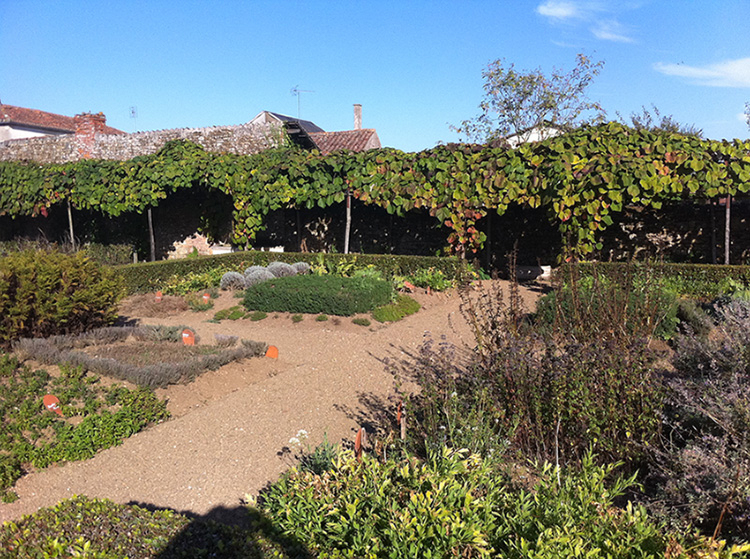
Beautifully designed medieval garden

Fruit and vegetables readily found their way into the medieval castle kitchen where they featured in many medieval recipes - some simple and some quite exotic ones! Pears stewed in red wine and spices was a good example of the latter. Apart from pears there were apples, quince and berry fruits.

Blackberries

Flowers were cultivated for a variety of uses in the castle. Some for decoration, some for consumption as part of a medieval salad and some for medicinal purposes.

The most abundant 'crop' in a medieval garden was usually herbs and that was because of the many, many ways in which medieval people used herbs. This is what we take a look at next.

Medieval Herbs

Herbs were amongst the most important plants in a medieval castle garden and were prized either for their taste or their medicinal properties. 

A typical, well planted medieval garden contained an incredible variety of herbs, most of which are still popular today. The difference back in medieval times, especially medieval England and France, was that herbs were used to a greater extent and many people had a good general knowledge of herbs and how best to use them.

Let's take a look at some medieval herbs which were popular for their medicinal uses, starting with one that many people many have never even heard of!

Agrimony
Used in medieval times for the treatment of stomach problems

Agrimony in flower

Medieval herbs with names that are a little more familiar to people today:

Angelica
Medieval use: For the digestive system

Borage
Medieval use: For the stomach and chest

Dittany
Medieval use: Good for poultices

Dittany
Flax
Medieval use: To stimulate appetite

Sage
Medieval use: To treat colds

St John's Wort
Medieval use: To help with burns and bruising

The list of herbs from the medieval era is a long one and there are some great resources for anyone who is interested in learning more about the general subject of medieval gardening. Here is a great example - a medieval herbs list which explains the variety of uses and gives an A-Z of some of the most commonly used herbs from medieval England and France.

Medieval Garden Reading Resources

Medieval Gardens (An introduction to the role of medieval gardens in England and France courtesy of Medieval-Recipes.com)

Plants In Medieval Art (Metropolitan Musem Of Art - The Cloisters Museum and Gardens)

Trees Of Medieval England (Department of Plant Sciences, University of Oxford)

The above resources are just a sample of the wealth of information that exists and has been published to date. There are many more but these particular 3 were chosen because they exemplify the scope of the subject of medieval gardens as a whole. Hopefully, you will find something of interest there :) 

Labels: , , ,

Friday, September 28, 2012

Medieval Castle: Château d'Angers

The medieval castle in Angers in France's Loire Valley is a must see for anyone interested in medieval history. The Château d'Angers is not only a stunning piece of medieval architecture and medieval castle design but its list of tenants over the centuries reads like the 'Who's Who' of medieval greats! Here are just some of the people who spent time at the Château d'Angers:

Henry II ~ Eleanor Of Aquitaine ~ Philip II ~ Catherine de Medici

Visiting the castle leaves a unique imprint on the mind - at least that's what we found. Its style and location as well as the colour and pattern of the stonework are like no other medieval castle we've ever seen before.The drawbridge at the entrance with its heavy chains makes you feel like you're walking back through time!

Read more about medieval castles in France on our main website.

Labels: , , , , , ,

Tuesday, May 8, 2012

Medieval Donjon - Rooftop View

Medieval castles had common architectural features and the donjon is perhaps one of the most notable. Introduced into Britain by the Normans, the donjon became known in England as the castle keep.

Medieval history enthusiasts today can enjoy visiting many castle keeps whch have been lovingly restored and preserved. Some are just a shell and a shadow of their former medieval glory but others still have their staircases and interior rooms and floors intact. This type of donjon is always well worth a visit.

Pons is a small medieval town in SW France. It's a place most people have never heard of and yet it has a fabulous, preserved medieval donjon. Here is a video clip of the views from the very top of the donjon, sufficient to make you realise the degree of advantage such a high building brought to the town's people back in medieval times.

Labels: , , , ,

Saturday, March 10, 2012

Norman Medieval Castles & Byzantium

In terms of medieval history, most English school children traditionally learn about key medieval battles and medieval kings. At the top of the list is the Battle of Hastings, William The Conqueror and the Norman Conquest. The Normans came from Normandy in France so everyone assumes that they were French. However, the truth is somewhat different - and interesting!

The Normans were in fact descended from the Vikings who invaded that northern part of France and assimilated into the local community. Indeed, their ancestral Viking blood and thirst for conquest of new territories meant that England was not the only country to suffer their invasion.

The Normans were active right across the medieval world and in particular in Southern Italy, along the Dalmatian coast, fighting for and against the Byzantine Empire. As pilgrims made their way to and from the Holy Land there were resulting, seeminghly inevitable disputes into which stepped Norman mercenaries and the time they spent in this part of the world left its mark.

Take a look at the picture below: a Norman medieval castle with characteristic walls and strength but it is not a castle in France or England! This is an early Norman castle in Adrano, Southern Italy.


Image courtesy of wikicommons.


The key point here is that the medieval world was much more fluid and fragmented than we think.

It is easy for us to be swayed by the headlines of history. The truth of all history, not just medieval history, is that there is always a lot more to it than at first meets the eye.

Labels: , , , , ,

Sunday, January 29, 2012

Medieval Siege Weapon In Action

Medieval siege weapons are a fascinating subject! The trebuchet was used extensively in medieval warfare to bombard castles into submission, damaging and often destroying castle walls and keeps. We wrote previously about the wonderful replicas of a medieval trebuchet which were demonstrated at Tiffauges Castle in France.

Now we can go one step better .... we can share a video clip of one of these medieval siege weapons actually being fired. It was not easy to follow the trajectory of the missile after the trebuchet was fired as it travelled much further faster than anyone expected!


Read more about medieval siege engines


Labels: , , ,

Friday, June 3, 2011

Richard The Lionheart's Castle: Chateau Gaillard

It was a rainy, misty day when we arrived in the village of Les Andelys in Normandy. However, we didn't allow the weather to dampen our enthusiasm for a visit to the imposing landmark sitting 90 metres up on the hill above: Chateau Gaillard.


Today there are just ruins so the castle is but a shadow of its former self - a once glorious and incredible piece of medieval architecture, brought to life by none other than King Richard 1st. Having done some reading on the subject, we understand that it was Richard's experiences whilst on crusade that inspired the building of Chateau Gaillard. He had seen some mighty walled defences and noted their architectural style which helped afford more defence.

Construction of the castle began in 1196 and, when complete just two years later - an incredible feat for such a build - it was arguably the most formidable castle in all of medieval Europe. It was also one of the first castles in Europe to ever use machiolations.

It's glory under its patron King Richard, however, was to be short-lived for only a few years after his untimely death in 1199 AD, the castle was captured by King Philippe II of France. As mentioned in our dedicated page on castle defence and attack Chateau Gaillard was ironically breached through no more than an unguarded chapel window.

We will revisit the subject of Chateau Gaillard again in our Medieval Castle Blog and share more of our photographs. In the meantime, you can read more on the Wiki page on Chateau Gailard

The French themselves have a great passion for their castles or Châteaux de France as they call them. Although the text is in French, there are some great photographs on the following Chateau Gaillard page.

Labels: , , , ,

Tuesday, May 10, 2011

King Richard I - A Medieval King's Gamble

We are always interested to read good books on medieval history with medieval castles and medieval kings and queens being our preferred subjects.

David Boyle's book, Blondel's Song tells the story of King Richard 1st, his part in the 3rd Crusade and his subsequent capture and ransom. There are many interesting angles to this story but throughout the telling one thing stands out. Richard led from the front and took risks beyond those expected of a king. Whether it was storming ashore at Cyprus or desperately seeking a way home during the winter of 1192 there were many points where the history of this extraordinary man and to some extent the future of England could have taken a completely different turn.

A gambling man might well have advised Richard that taking risk after risk was no way to run a kingdom. He only had to lose once and the results would be dire. This happened with his capture and ransom and then, as if he had not learned anything, again at Chalus-Chabrol where he was wounded and subsequently died whilst attacking a relatively insignificant medieval castle.


DSC_5832

Labels: , , , ,

Monday, February 28, 2011

Medieval Keep Built By A Fairy In The Night

Medieval history is full of legend and myth. Some argue that the stories handed down over the centuries must have had an element of truth in them to have withstood the test of time. Others argue that fiction was as popular in medieval times as it is now. There is no clear answer.

What is clear, however, is that there is tangible history associated with medieval legend. Take for example, the Melusine Tower - a medieval castle keep in Vouvant in the Vendee SW France. According to local legend, it was built by the fairy Melusine in a single night. In actual fact (and that's all historians can talk about!) it was built by the powerful Lusignan family - heirs to the realm of Guy de Lusignan who was a medieval knight and fought at the side of Richard The Lionheart.

We were lucky enough to visit Vouvant and here are 2 video clips of footage we took ...

Melusine Tower, Castle Keep
This clip is a distance shot showing the tower in its context within the village


Melusine Tower and medieval curtain wall
This clip is a close up and pans across the medieval curtain wall showing its height above the village.

Visit our medieval castles channel on YouTube.

Labels: , , , , ,

Wednesday, December 8, 2010

Medieval Castle Snowy Escape

Heavy snowfalls and record low temperatures have hit Britain in the last week and many people have felt 'besieged' in their own homes, unable to get out and about. However, the experience of being 'besieged' in winter in the 21st century bears little resemblance to what was endured in medieval times.

One instance in particular comes to mind ... the winter of 1141 and the predicament that Matilda, daughter of King Henry I of England, found herself in.

Matilda was by rights the next ruler of England but Stephen of Blois had taken the throne for himself following the death of King Henry I whilst Matilda was in France (confined with her third pregnancy). Matilda's loyalty to her father and his wish that she and her son(s) would one day rule England left her no choice but to challenge Stephen. So she travelled to England and embarked upon a campaign against him.

By December 1141 Matilda had retreated to the medieval castle at Oxford and Stephen marched his men unexpectedly from Bristol to attack Oxford in an attempt to capture Matilda. Oxford Castle was a well defended stronghold (read more about castle defence) so taking it by force in the middle of winter was not a viable option. Stephen chose instead to lay siege to the castle and wait for Matilda's supplies to run out over the winter months.

Matilda's response, however, was not what Stephen expected. She formed and executed a daring and hazardous plan ... just before Christmas she slipped quietly out of a side door in the castle with just three of her trusted soldiers. They were all dressed in white capes so as to blend into the landscape which was covered in thick snow. The stream nearby had to be crossed in order to escape and the fact that it was frozen over was to her advantage for it bore the weight of her small party and they managed to get away quietly and reach safety some miles away in Abingdon.

So how cold and frightening must Matilda's escape have felt?
Imagine ...
  • no sophisticated clothing or footwear to combat the freezing temperatures
  • no torches to help light their way and ensure they were on the right path
  • the imminent threat of capture hanging over them which, if it had happened, would have signalled the end of her dreams
Those few hours on that December night 869 years ago must have been an experience Matilda never forgot.

So when you are next drinking your mug of cocoa, wrapped in a warm blanket and lazily reading a book by the fireside on a snowy winter's evening ... spare a thought for the brave Matilda!

Labels: , , ,

Thursday, August 26, 2010

Haunted Castles In England - Berkeley Castle

This is a medieval castle well worth a visit and merits several posts on the Medieval Castle Blog.

Berkeley Castle is said to be a haunted castle and when you read the story of the confinement, torture and death of King Edward II that took place there, you can understand why. It is a horrific story and when you visit Berkeley Castle and see the guard room where the King's torture is believed to have taken place, there is no doubt about the chilling atmosphere that seems to pervade it.

Here is a video of the guard room taken from the courtyard outside. The windows are the very same as the poor King probably looked out of in desperate hope of being rescued.


Labels: , , , , ,

Saturday, January 16, 2010

A Castle Wedding With An Owl But No Pussycat!

Medieval castles are often used as wedding venues for couples to get married in - they offer history and romance like no other venue can. It's a subject we've covered before with features on the likes of Eastnor Castle, one of the most romantic wedding venues in England. Although not medieval by age, its architecture is 'mock medieval' having been designed by the great architect Robert Smirke.

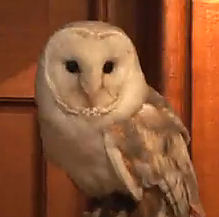
Well, how's this for a touch of real castle romance ... a video of a couple who got married at Eastnor Castle on New Year's Eve 2009. Watch out for the trained owl who flies down the church aisle to give them their wedding rings. How romantic is that?!

Read about their romantic wedding and enjoy the video.

Labels: , , , , ,

Thursday, May 28, 2009

Medieval Castle Bed Breakfast

There was a fascinating tv series aired recently called "Grand Designs" and one particular episode was dedicated to a 14th century, medieval castle restoration. It told the story of how it had been the dream of an English couple, Francis and Karen Shaw, to one day own and live in a castle. The cameras must have been with them on and off for a long time as it showed what they had initially purchased - just crumbling ruins with no roof and trees growing inside it - through the process of acquiring planning permission for the restoration and then finally to the building works actually taking place with the help of six, specialist stonemasons.

It offered a great insight not only into the difficulties and costs associated with a castle restoration project but also into what the original medieval stonemasons worked with and how they achieved their goals.

Despite setbacks and taking much longer to complete than originally anticipated, Peel castle which stands in a wonderfully secluded and picturesque part of West Yorkshire is now the Shaw's family home. However, in order to cope with their mortgage and the high maintenance costs, the family also offer part of the castle's accommodation as luxury bed and breakfast.

So if you are ever in that part of the world you can enjoy a unique 'medieval' stayover courtesy of the determination of Francis and Karen Shaw to make their dream come true.

Read more on this amazing story of medieval castle restoration.

Labels: , , , ,

Thursday, November 6, 2008

Carlisle Castle - A Medieval & Military Fortress

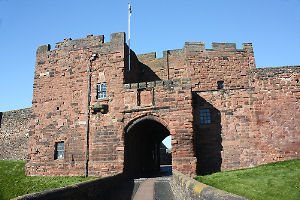
I recently went with my family to visit Carlisle Castle. What a surprise it was. Almost 900 years of history packed into one place - and what a history! Carlisle Castle has played a role in some of the most colourful and significant periods in British history.

These include:
  • being at the frontline of Anglo-Scottish border warfare for many years including 1315 when it repelled a particularly fierce attack by the Scots

  • acting as a prison for Mary Queen of Scots in 1568

  • being besieged for eight months by Parliament's Scots allies during the English Civil War with its Royalist garrison only surrendering after eating rats and dogs (1645)

  • being the last English fortress ever to suffer a siege - in 1746 during the Jacobite Rising. Bonnie Prince Charlie's garrison of men were unable to hold off the Duke of Cumberland's army only to become prisoners there themselves. Many of them died in the castle.

Taking a tour of the castle was both interesting and enjoyable. The architectural features were very notable as one would imagine of a truly medieval castle and there were some particularly fascinating things such as the stone carvings in the great Keep believed to have been made by prisoners in 1480. I am saving that topic for a more detailed blog with photos later on.

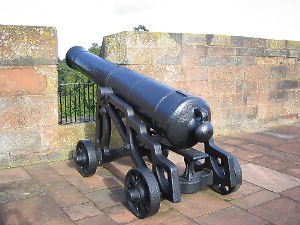
The exhibitions are really well presented with many artefacts on display. Walking around the castle walls offers fantastic views over the city of Carlisle and the wonderful black cannons were really impressive! (See photo) The military history of the castle is reflected in the wonderful Border Regiment & King's Own Royal Border Regimental Museum which is housed within the castle walls and to which you get free entry when you purchase a ticket to tour the castle.

There is so much to Carlisle Castle that a single blog post just can't do it justice!

You have to go there to believe it and if you can't get there then revisit this Blog and medieval-castle.com where we will be developing further content on what must surely be one of the best medieval fortresses in England, possibly second only to the Tower of London.

Labels: , , , , ,